

Puzzle
Sudoku Classic
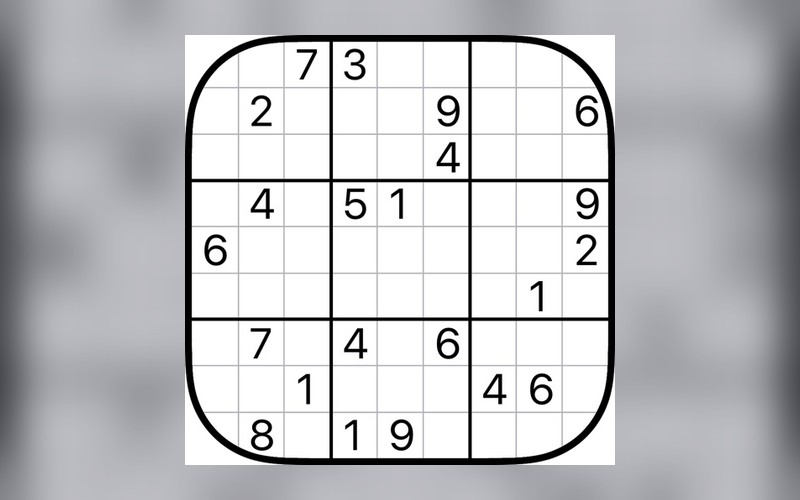
Fill the grid, test every number carefully, and solve a classic logic puzzle with clean deduction.
Mobile tip: Rotate to landscape before pressing play. Use Play Fullscreen if the game feels cramped.
Touch controls enabled
Drag to aim
Release to throw
Release to throw
Player Challenge
Try a Focused Run
Play Sudoku Classic for five focused minutes, then try one cleaner run with fewer mistakes.
Not completed yet.
Playability Check
How did this run feel?
One tap helps prioritize fixes for loading, controls, and speed.
Keep Playing
Recommended Next
A quick path into another run after this game.
Continue Playing
Recently Played
Jump back into games you opened recently on this device.
Open a few games and your recent history will show up here.
Why You'll Like Sudoku Classic
Sudoku is older than most people think. The 9×9 number-placement grid was invented in 1979 by Howard Garns, an American architect, and published as ‘Number Place’ in Dell Pencil Puzzles & Word Games. It went largely ignored for five years until Maki Kaji of the Japanese magazine Nikoli picked it up in 1984, renamed it Sūdoku (sū = number, doku = single), and tightened the rules — Nikoli puzzles were required to be symmetric and have a unique solution. The 2004 launch in The Times of London is what triggered the global craze; by 2005 it was in newspapers in over 50 countries.
The rules are minimalistic: place digits 1–9 in a 9×9 grid such that every row, every column, and every 3×3 box contains each digit exactly once. The interesting part is what is not stated: a well-formed Sudoku must have exactly one solution, which is what separates a real puzzle from a half-finished grid. Generating one is non-trivial — most generators (including this one) work the other way around: build a complete valid solution first, then carve out clues by removing cells one at a time and verifying the puzzle still has a unique solution after each removal.
This browser build offers three difficulty levels with explicit clue counts. Easy removes 30 cells (51 clues remaining), Medium removes 45 (36 clues remaining), and Hard removes 55 (26 clues remaining). For context, the theoretical minimum for a uniquely solvable Sudoku is 17 clues — proven by Gary McGuire’s 2012 brute-force search — so even Hard is well above that threshold and does not require pure backtracking. Notes mode (the ✎ button) lets you scribble candidate digits into a cell without committing; this is essential past Easy, because Hard puzzles will routinely require X-wing, swordfish, or coloring techniques where you have to track multiple candidates per cell over many moves.
Sudoku Classic is best approached as a deduction problem rather than a guessing game. Each move should reduce uncertainty: remove an impossible option, expose a forced placement, or split the puzzle into a smaller decision. When the board feels stuck, the missing clue is usually in a row, region, or relationship you have not rechecked yet.
For players arriving from search, the practical question is how to make the next attempt better. In Sudoku Classic, that usually means focusing on deduction chains, candidate tracking, and reversible thinking. The more you understand that core loop, the less the game feels random and the more each restart becomes useful practice.
Strategy notes
Use a slow pass to mark what cannot happen, then a faster pass to act on forced moves. If you must try a branch mentally, choose the branch that creates the quickest contradiction so you can return safely.
How to Play
- Fill the Grid: Click any empty cell, then press 1–9 (keyboard) or tap a number to place it. The cell highlights row, column and box conflicts in real time.
- Notes Mode: Toggle the ✎ Notes button on, then numbers you press become small candidate marks instead of confirmed values. Toggle it off to commit a number.
- Difficulty: Use the difficulty selector before a new game. Easy = 51 starting clues, Medium = 36, Hard = 26.
- Goal: Each row, column and 3×3 box must contain digits 1–9 exactly once.
- Win: When the last empty cell is filled correctly, the timer stops and you win — no submit button required.
Tips and Strategy
- Scan the board in a consistent order so you do not miss obvious constraints.
- Mark candidates or possibilities before making risky commitments.
- Prefer forced moves over guesses, even when they seem small.
- When stuck, recheck the most constrained row, column, peg, or region.
- Undo mentally from the last certain point, not from the last move you liked.
More Ways to Play
Browse Related Collections
Keep exploring by play style, controls, and search intent connected to Sudoku Classic.
Free Browser Games
Play free browser games that open directly in the page, with quick starts, clear categories, and no launcher required.
29 gamesNo Download Games
Find games you can play online without downloads, installs, app stores, or separate launchers.
29 gamesHTML5 Browser Games
Browse HTML5 browser games that run through modern web technology instead of plugins or native launchers.
29 gamesPuzzle Games Online
Play online puzzle games built around logic, numbers, words, matching, planning, and careful problem solving.
14 gamesKeep Exploring
Similar Games
Looking for more Puzzle games? These pages are the closest next clicks from here.

Puzzle
Minesweeper Classic
Uncover safe squares, read the numbers, flag the mines, and clear the board without detonating anything.
Editor Pick
Puzzle
Tic-Tac-Toe Duel
Claim the center, force the line, and finish a quick browser duel before the grid locks up.
Baseline Pass

Puzzle
Sokoban Puzzle
Push every crate onto its target square without getting stuck — each move matters and there is no pull.
Baseline Pass
Puzzle
Crossword Classic
Fill the crossword grid, solve clue by clue, and complete a classic browser word puzzle.
Baseline Pass
Strategy
Chess Classic
Play a full game of chess against the computer or a friend, right in your browser with no account needed.
Editor Pick
Puzzle
Solitaire Classic
Sort the deck, build clean stacks, and work through a classic browser solitaire layout.
Editor Pick
Community
Player Reviews
FAQ
Common Questions
What does each difficulty actually change?
Only the number of starting clues. Easy removes 30 cells (51 numbers given), Medium removes 45 (36 given), Hard removes 55 (26 given). The minimum theoretically possible for a uniquely solvable Sudoku is 17 clues, so Hard is harder than most newspaper puzzles but well above 'evil' grade.
Is the puzzle guaranteed to have a unique solution?
Yes, by construction. The generator builds a fully valid 9×9 first, then carves clues by removing cells one at a time and re-checking uniqueness after every removal. If a removal would create multiple solutions, the cell is restored. So unlike some puzzle apps, you can solve purely by logic without ever needing to guess.
How do I use Notes mode?
Click ✎ Notes (or use the keyboard shortcut) to enter pencil-mark mode. Numbers you press now appear as small candidates inside the selected cell instead of replacing its value. Click ✎ again to exit and place real numbers. Notes mode is essential past Easy because Hard puzzles often require tracking 3-4 candidates per cell across many moves.
Can I get a hint or auto-solve?
There is no hint button or auto-solve in the current build. The full solution is computed when the puzzle is generated and stored, but the UI does not surface it — if you get genuinely stuck, you have to start a new game.
Are these puzzles symmetric like Nikoli's?
No. Nikoli's editorial standard is rotational symmetry of the clue pattern; this build removes cells in a random order with only the uniqueness check, so the clue pattern is asymmetric. The puzzles are still solvable by pure logic, they just look less aesthetically tidy than a hand-crafted Japanese puzzle.