

Action
Snake Classic
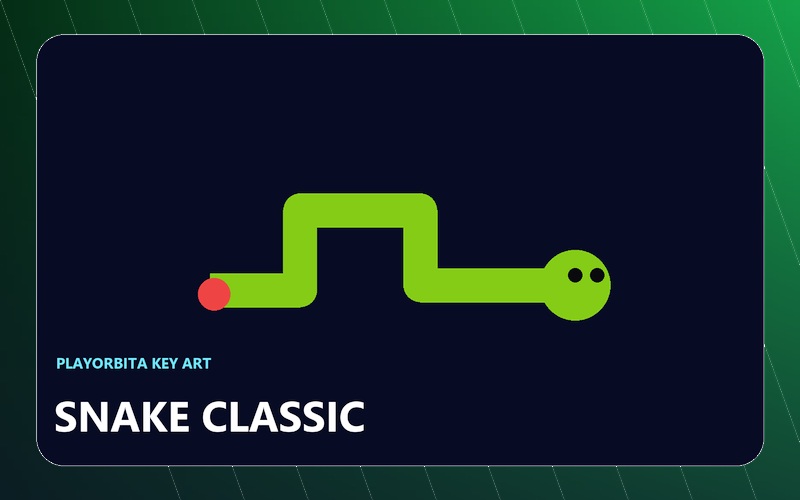
Eat food to grow longer, avoid hitting your own tail, and see how big your snake can get.
Mobile tip: Rotate to landscape before pressing play. Use Play Fullscreen if the game feels cramped.
Touch controls enabled
Drag to aim
Release to throw
Release to throw
Player Challenge
Try a Focused Run
Play Snake Classic for five focused minutes, then try one cleaner run with fewer mistakes.
Not completed yet.
Playability Check
How did this run feel?
One tap helps prioritize fixes for loading, controls, and speed.
Keep Playing
Recommended Next
A quick path into another run after this game.
Continue Playing
Recently Played
Jump back into games you opened recently on this device.
Open a few games and your recent history will show up here.
Why You'll Like Snake Classic
Snake as a genre traces back to the 1976 arcade cabinet Blockade by Gremlin Industries — a two-player game where each player drove a growing wall, and the loser was whoever crashed first. The single-player version most people know was written by Taneli Armanto and shipped on the Nokia 6110 in 1997, then refined as Snake II for the Nokia 3310 in 2000. That handset sold 126 million units. There is a strong argument that more people have played Snake than any other game in history, simply because almost every Nokia phone of the late 1990s had a copy and there was no app store to choose otherwise.
This browser build is a single-file HTML5 implementation, around 170 lines, and it makes one design choice that surprises people raised on the Nokia version: the walls do not kill you. The playfield wraps in all four directions — leave the right edge and you re-emerge on the left, top wraps to bottom. Death only happens when the snake’s head hits its own body. That removes wall-crashing as a failure mode, but it makes long-game survival much harder, because you can no longer use the boundary as a sacrificial deflector.
Three practical things to know. First, three speed presets are available before you start: Easy is 170 ms per move, Normal is 120 ms, Fast is 70 ms — that is the entire difficulty curve, the speed does not change once a run starts. Second, the displayed Level is purely cosmetic — it is floor(score / 5) + 1 and does not affect speed or food spawning, so do not chase ‘levels’ the way you would in Tetris. Third, because the board wraps, the optimal long-snake strategy is a Hamiltonian path: a single fixed cycle that visits every cell exactly once. Follow it forever and you can theoretically fill the entire grid without colliding. Most strong players use a relaxed Hamiltonian — follow the cycle when the body is long, take direct shortcuts to food when it is short.
Snake Classic becomes more strategic as the snake grows. Early food is easy, but every pickup reduces open space and turns the board into a routing puzzle. The safest players do not chase food directly; they take paths that keep an escape lane open after the turn.
For players arriving from search, the practical question is how to make the next attempt better. In Snake Classic, that usually means focusing on route planning, self-collision avoidance, and space control. The more you understand that core loop, the less the game feels random and the more each restart becomes useful practice.
Strategy notes
Think of the snake body as a moving wall. Before turning toward food, check where the tail will be in a few seconds. Loops, perimeter routes, and wide turns give the tail time to clear space.
How to Play
- Pick a Speed: Easy / Normal / Fast before you start the run. Easy gives you 170 ms per move; Fast cuts that to 70 ms.
- Movement: Arrow keys or WASD on desktop. Swipe on touch screens. You cannot reverse direction in a single move.
- Eat to Grow: Steer your head into the red food. Each food is +1 length and +1 score; new food spawns immediately on a random empty cell.
- Walls Wrap: This version has no fatal walls — leave one edge and you re-enter on the opposite side. The only fatal collision is hitting your own tail.
- Best Score: Your high score is tracked in-session. Refreshing the page resets it.
Tips and Strategy
- Use the outside edge of the board to create predictable routes.
- Avoid tight U-turns once the snake is long.
- Do not chase food through a narrow gap unless the tail is moving out of it.
- Keep enough room to turn around after every pickup.
- Slow, clean routes beat direct paths that trap your own body.
More Ways to Play
Browse Related Collections
Keep exploring by play style, controls, and search intent connected to Snake Classic.
Free Browser Games
Play free browser games that open directly in the page, with quick starts, clear categories, and no launcher required.
29 gamesNo Download Games
Find games you can play online without downloads, installs, app stores, or separate launchers.
29 gamesHTML5 Browser Games
Browse HTML5 browser games that run through modern web technology instead of plugins or native launchers.
29 gamesArcade Games Online
Play arcade games online with quick restarts, simple goals, score chasing, timing, and replayable browser runs.
15 gamesKeep Exploring
Similar Games
Looking for more Action games? These pages are the closest next clicks from here.
Action
Breakout Retro
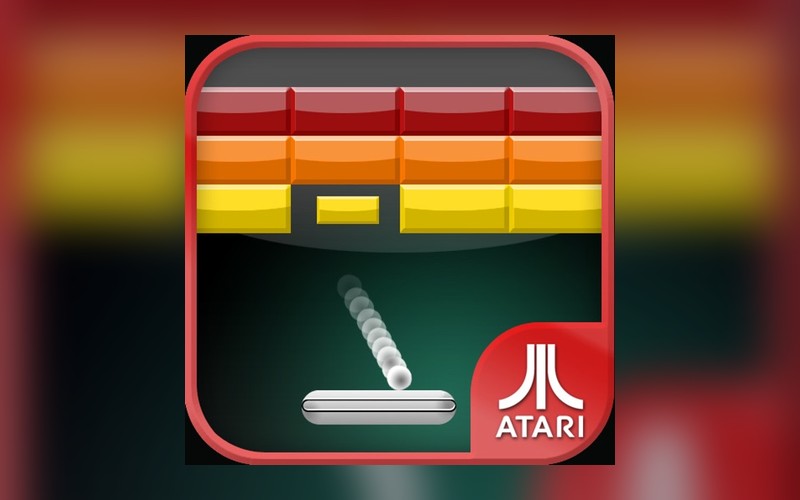
Bounce the ball off your paddle, smash through rows of bricks, and clear the board without losing a life.
Editor Pick
Action
Asteroids Classic
Thrust, rotate, and shoot drifting space rocks before they split into smaller, faster fragments.
Baseline Pass

Action
Starfall Catcher
Play Starfall Catcher, a cozy arcade game where you slide a moon tray, catch falling stars, avoid hot meteors, and build a gentle high-score combo.
Editor Pick
Action
Orbital Hook
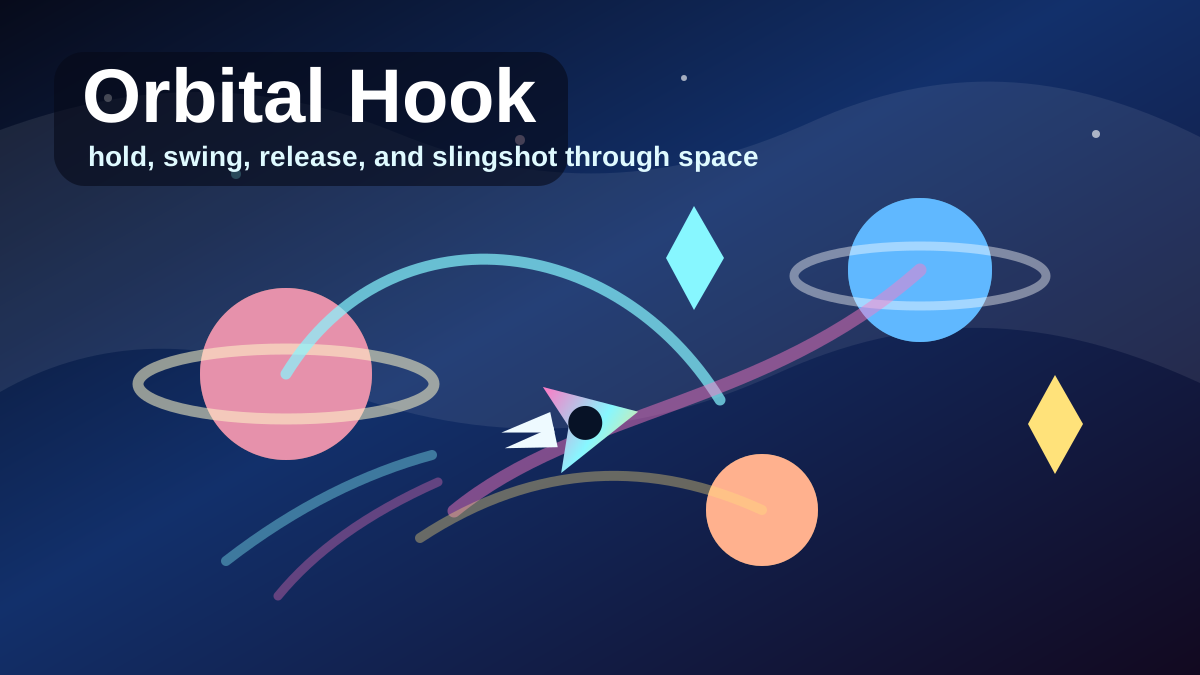
Play Orbital Hook, a one-touch space swinging game where you hook planets, release into slingshots, collect crystals, pass neon gates, and chase a long-distance high score.
Editor Pick
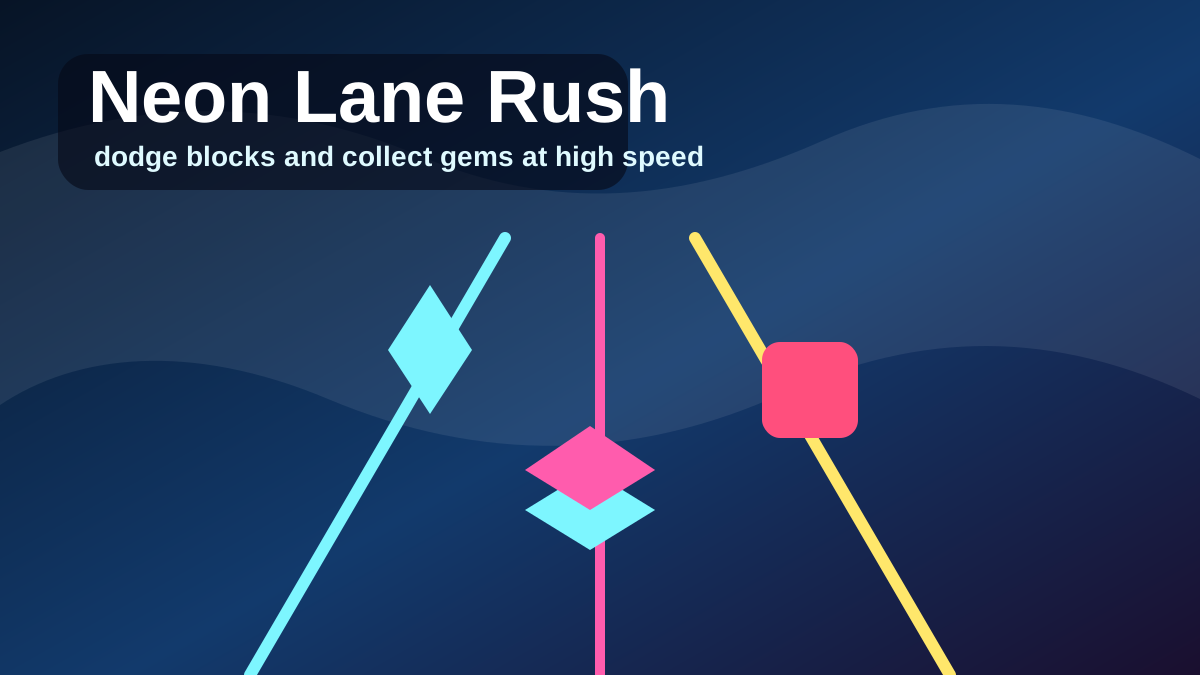
Action
Neon Lane Rush
Play Neon Lane Rush, a fast three-lane reflex runner where you dodge neon blocks, collect cyan gems, build combo, and chase a short-session high score.
Editor Pick
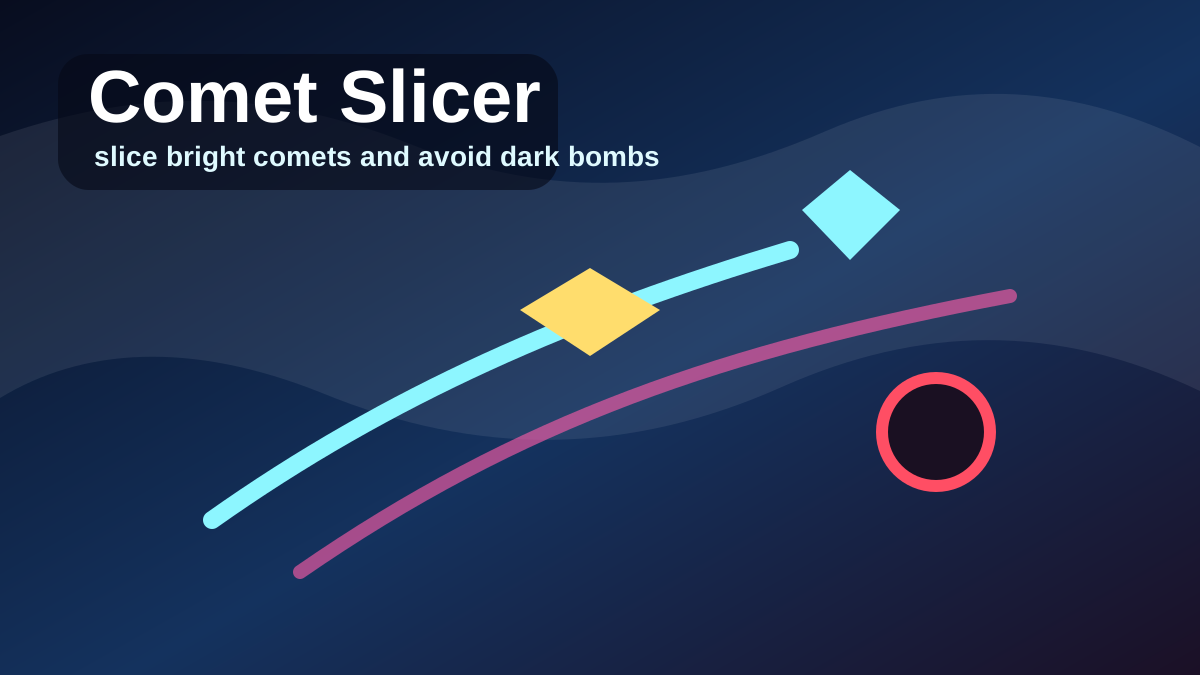
Action
Comet Slicer
Play Comet Slicer, a fast cosmic slicing game where you cut bright comets, avoid dark bombs, build combo, and chase a sharp arcade high score.
Editor Pick
Community
Player Reviews
FAQ
Common Questions
Do the walls kill me?
No. This version uses wrap-around walls — exit any edge and you reappear on the opposite side. The only way to die is for the snake's head to land on a square already occupied by its body. That is a deliberate design choice, not a bug; it removes wall-crashing as a failure mode and forces all the difficulty into managing your own length.
What do the three speed buttons actually do?
Easy is 170 ms per move, Normal is 120 ms, Fast is 70 ms. The speed is fixed for the entire run — it does not accelerate as you grow. Pick before you press Play; you cannot switch speeds mid-game.
Does the level shown on screen affect anything?
No, it is cosmetic. Level is calculated as floor(score / 5) + 1 and is just a readability bar — the snake does not move faster, food does not change, and there are no level-up effects. If you want a real difficulty jump, restart on Fast.
Can I theoretically fill the entire board?
Yes. The deepest known strategy is a Hamiltonian path — a fixed cycle that visits every cell exactly once. Follow it as long as the snake is long enough that shortcuts are dangerous, and you can fill the whole grid without ever colliding. The hard part is having the patience to actually do it.
Is my high score saved?
Only for the current page session. Refreshing the page or closing the tab resets the Best display. There is no localStorage save in this build, so do not get attached to a record across reloads.