

Puzzle
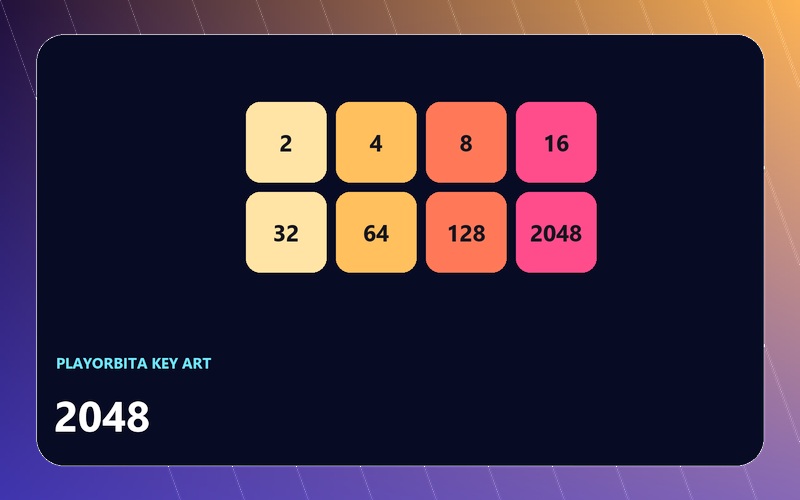
2048
Play 2048 for free. Get ready for an intense puzzle experience right in your browser.
Mobile tip: Rotate to landscape before pressing play. Use Play Fullscreen if the game feels cramped.
Touch controls enabled
Drag to aim
Release to throw
Release to throw
Player Challenge
Try a Focused Run
Play 2048 for five focused minutes, then try one cleaner run with fewer mistakes.
Not completed yet.
Playability Check
How did this run feel?
One tap helps prioritize fixes for loading, controls, and speed.
Daily Result
Run complete
0 points
Your local result is ready.
Your online sync status will appear here.
Keep Playing
Recommended Next
A quick path into another run after this game.
Continue Playing
Recently Played
Jump back into games you opened recently on this device.
Open a few games and your recent history will show up here.
Why You'll Like 2048
2048 became one of the most recognizable browser puzzle games of the 2010s because the rules are instantly readable: slide a 4x4 grid, merge equal numbers, and keep creating larger powers of two. Every move shifts all tiles as far as possible in one direction, so one careless swipe can break a clean stack that took dozens of moves to build.
Mechanically the board is strict. After each valid move, exactly one new tile appears in a random empty cell. It is usually a 2, with the occasional 4 forcing you to adjust your chain. That asymmetry matters because strong play assumes mostly small spawns and uses the board shape to absorb bad luck.
The dominant strategy is the corner anchor: pick a corner, keep the largest tile pinned there, and build a descending chain along that edge. Swipe away from the anchor only when there is no safer move, because that is how the largest tile escapes and splits your board. Reaching the 2048 tile is the win condition, but you can continue toward 4096, 8192, and beyond if the grid stays organized.
2048 is easiest to improve when you stop treating every slide as a separate move and start treating the board as a shape you are protecting. The strongest runs usually keep the largest tile anchored in one corner, then build a descending chain beside it so new small tiles have a clean path to merge upward. The danger point is not one bad spawn; it is breaking that chain and forcing your highest tiles into the middle of the board.
For players arriving from search, the practical question is how to make the next attempt better. In 2048, that usually means focusing on tile flow, corner control, and board discipline. The more you understand that core loop, the less the game feels random and the more each restart becomes useful practice.
Strategy notes
Use three directions as your normal rhythm and save the fourth direction for emergencies. Before swiping away from your anchor corner, check whether the largest tile can move out of position. If it can, find a slower move that keeps the structure intact.
Endgame route
After the first 1024 tile appears, play as if you are building the whole board again beside it. Keep the 1024 locked in the anchor corner, preserve the 512 and 256 next to it, and build the missing 1024 from smaller tiles. Most failed endgames happen because the player chases a distant merge and breaks the chain that was protecting the anchor.
Editorial QA notes
This page is treated as a core SEO page because the game has clear source attribution, stable local hosting, keyboard and touch controls, and proven search demand. The page should answer both player intent (“play 2048 now”) and strategy intent (“how do I actually win?”).
Mobile experience
On mobile, swipe input is the natural way to play. Use short deliberate swipes rather than fast repeated gestures, because one accidental opposite swipe can break the corner stack. If the board feels cramped, rotate to portrait with the browser UI collapsed and restart from the center control.
Troubleshooting
If the board does not respond, click or tap inside the game area once so the iframe receives focus. If saved progress looks wrong, the browser’s local storage may have been cleared or the page may be running in a private window.
Why this version is safe to feature
This is a self-hosted MIT-licensed 2048 implementation with visible author and license metadata. It is not positioned as an official app or a paid clone, and the page explains the original author and gameplay lineage clearly.
How to Play
- Move: Use arrow keys, WASD, swipe, or the on-screen direction buttons. Every move shifts every tile to the far edge in that direction simultaneously.
- Merge: Two tiles with the same value that collide during a move become one tile with their sum. Each tile can only merge once per move.
- Restart: Press R or use the center reset button below the board to start a fresh run quickly.
- Spawn: After every move a single new tile appears in a random empty cell — 90% chance of a 2, 10% chance of a 4.
- Win / Continue: Creating the 2048 tile triggers the win screen; choose Continue to keep going for higher tiles.
- Lose: Game over only when the board is full and no two adjacent tiles share a value.
Tips and Strategy
- Pick one corner as the home for your largest tile and protect it for the entire run.
- Build a descending line next to the largest tile so merges feed naturally into it.
- Avoid swiping away from the anchor unless every safer move is blocked.
- Keep at least two empty cells open so random spawns do not instantly trap you.
- Merge small tiles early; scattered 2s and 4s are what usually clog the board.
- Before every risky swipe, check whether the largest tile can leave its corner.
- Use the top row or opposite edge as a temporary buffer only when the main chain is stable.
More Ways to Play
Browse Related Collections
Keep exploring by play style, controls, and search intent connected to 2048.
Free Browser Games
Play free browser games that open directly in the page, with quick starts, clear categories, and no launcher required.
12 gamesNo Download Games
Find games you can play online without downloads, installs, app stores, or separate launchers.
12 gamesHTML5 Browser Games
Browse HTML5 browser games that run through modern web technology instead of plugins or native launchers.
12 gamesPuzzle Games Online
Play online puzzle games built around logic, numbers, words, matching, planning, and careful problem solving.
5 gamesKeep Exploring
Similar Games
Looking for more Puzzle games? These pages are the closest next clicks from here.
Sports
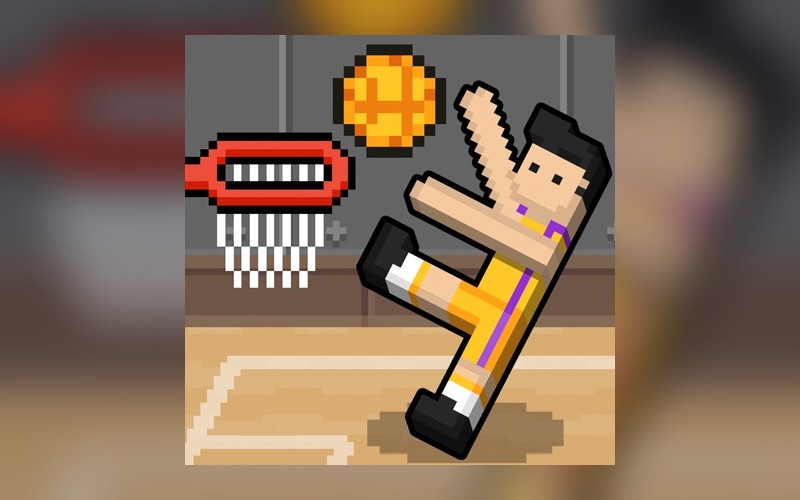
Basket Random
Jump, flop, and fight for messy baskets in a physics basketball game where every round changes the court.
Editor Pick
Puzzle
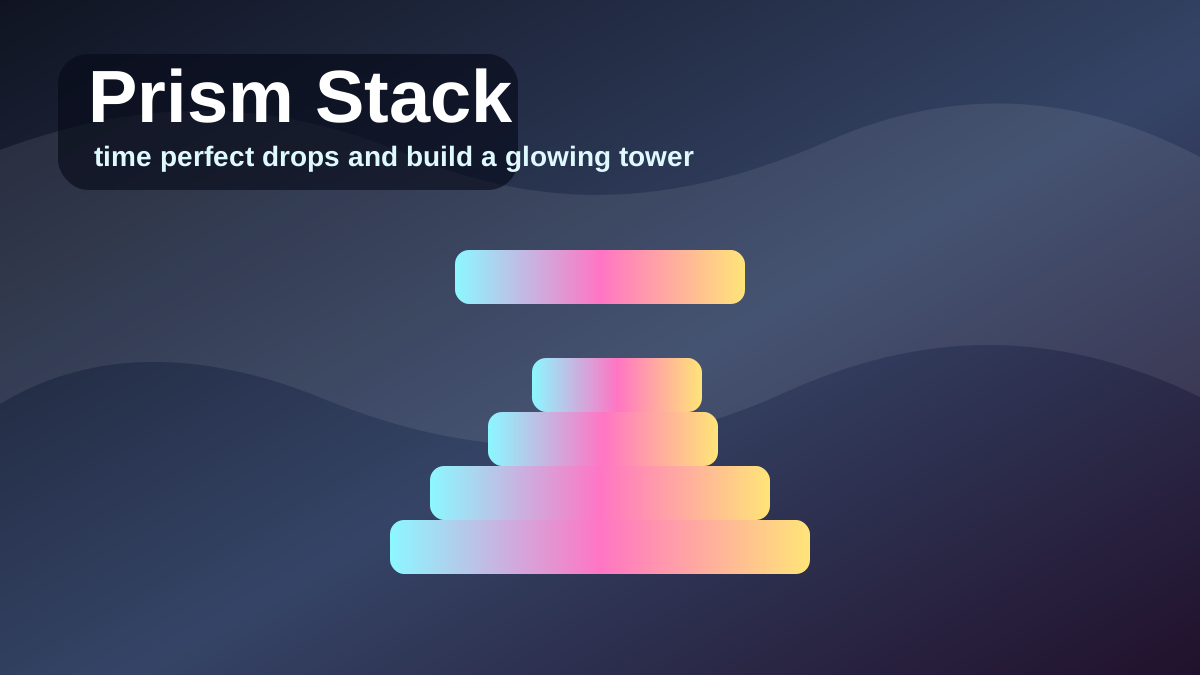
Prism Stack
Play Prism Stack, a one-tap precision tower game where you drop moving prism blocks, line up perfect stacks, and build a glowing high-score tower.
Editor Pick
Puzzle
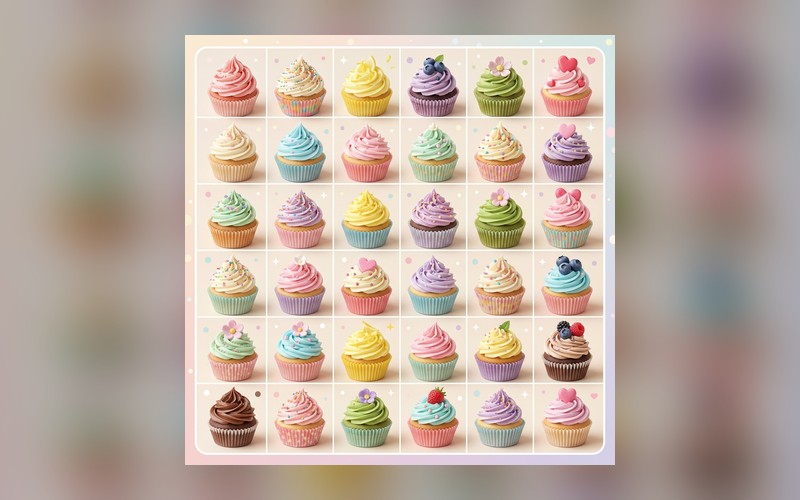
2048 Cupcakes
2048 Cupcakes takes the brutally addictive sliding-tile logic of the original 2048 and coats it in a sweet, visually delightful aesthetic.
Editor Pick
Puzzle
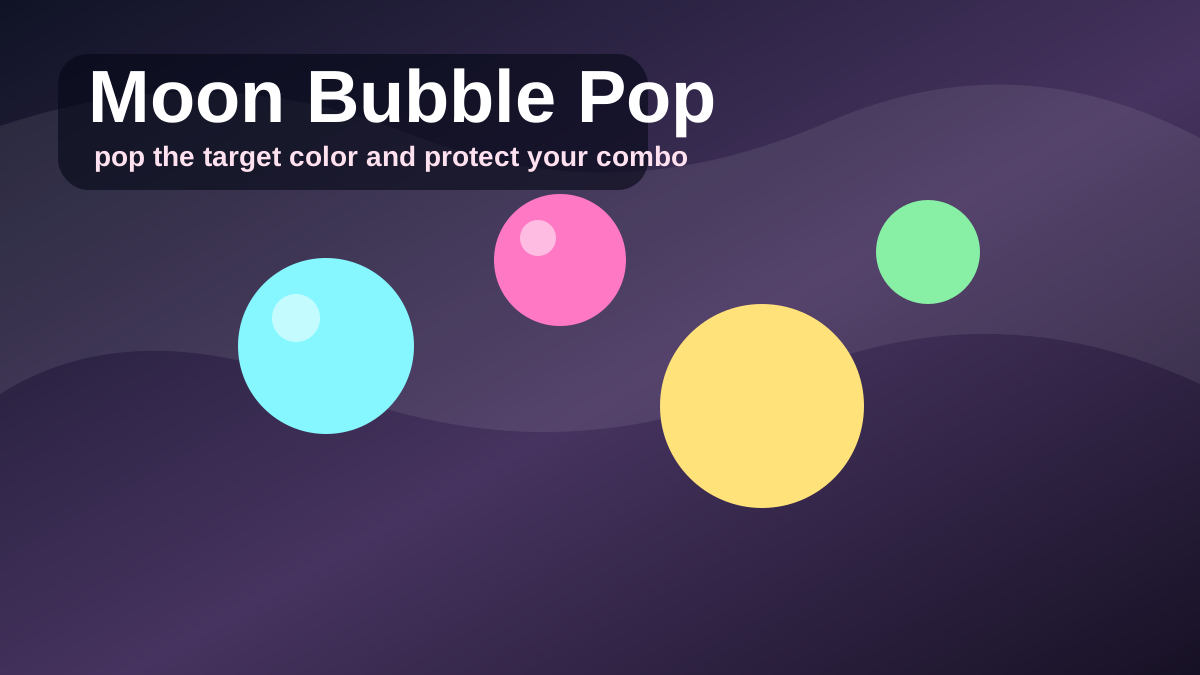
Moon Bubble Pop
Play Moon Bubble Pop, a colorful focus game where you pop only the target bubble color, protect your combo, and chase a clean high-score run.
Editor Pick
Puzzle
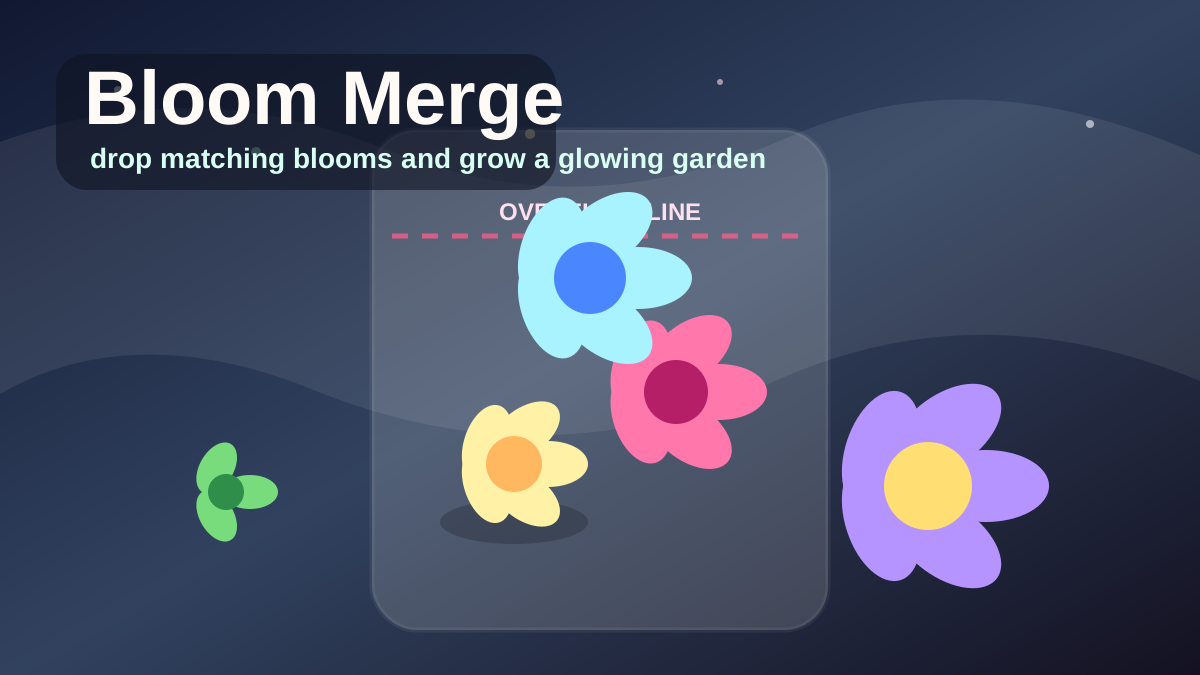
Bloom Merge
Play Bloom Merge, a cozy merge drop browser game where you drop matching blooms, grow rarer flowers, manage the overflow line, and chase a glowing garden high score.
Editor Pick

Action
Starfall Catcher
Play Starfall Catcher, a cozy arcade game where you slide a moon tray, catch falling stars, avoid hot meteors, and build a gentle high-score combo.
Editor Pick
FAQ
Common Questions
Who actually made 2048?
2048 was written by Gabriele Cirulli and released in March 2014 as a small open-source browser game. It followed earlier sliding-number games such as 1024 and Threes!, which is why 2048 is often discussed as part of that design family.
What is the highest tile possible in 2048?
On a standard 4x4 board the theoretical maximum is the 131072 tile, but reaching it requires a perfect run with no wasted moves. Most strong human players cap out somewhere between the 8192 and 32768 tile. The 2048 tile itself is just the win threshold — the game keeps going if you choose Continue.
Is the next tile really random?
Almost. Each move spawns one new tile in a random empty cell, and that tile is a 4 with 10% probability and a 2 with 90% probability in Cirulli's original implementation. The position is uniformly random among empty cells, but the value is weighted — which is why endgame planning has to assume mostly 2s with the occasional 4 ruining your column.
What is the corner strategy?
Pick one corner (most players use bottom-right) and never let your largest tile leave it. Keep the bottom row built as a descending chain (2048, 1024, 512, 256...) and only ever swipe up as a last resort, because an up-swipe is the move most likely to displace your anchor tile. This single rule is the difference between hitting 512 and hitting 2048.
Does the browser version save my progress?
The original Cirulli build uses localStorage to remember your current board and best score per browser. Clearing site data, switching devices, or playing in a private window will reset both. There is no account or cloud save in the classic version.
Why is 2048 hard even though the rules are simple?
Every move changes the whole board and adds a new random tile. Strong play is about preserving a stable shape, not just merging the biggest pair you see.
What should I do after reaching 1024?
Keep the 1024 tile anchored and build the second 1024 the same way you built the first one. Do not chase a far 512 if it breaks the descending chain.